
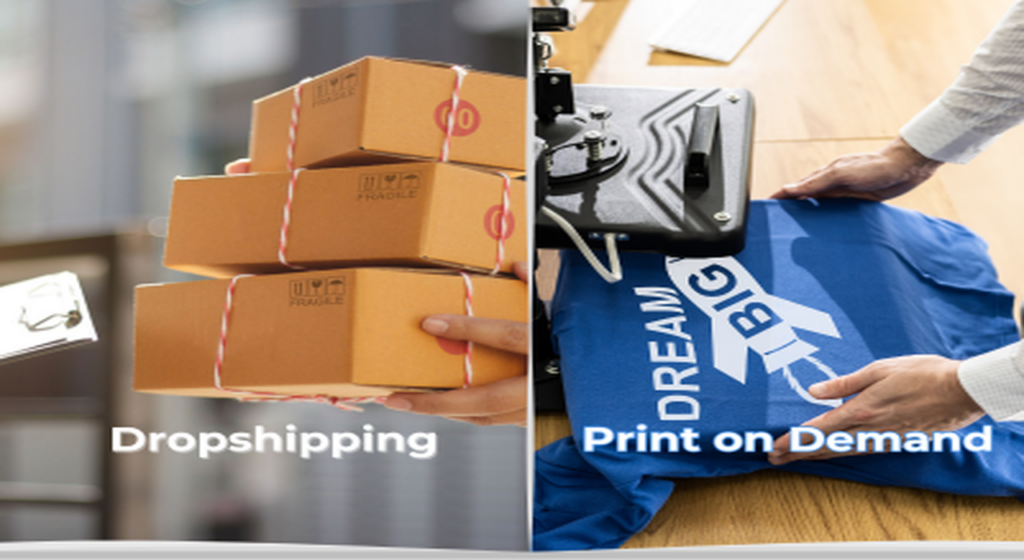
The world of eCommerce has evolved significantly, and two of the most popular business models today are dropshipping and print-on-demand (POD). Both offer low startup costs, no need for inventory storage, and the potential to generate passive income. But which one is better for aspiring entrepreneurs in 2024?
This guide provides a detailed comparison of dropshipping vs. print-on-demand, examining their advantages, challenges, profitability, and suitability for different types of entrepreneurs.
What is Dropshipping?
Dropshipping is a retail fulfillment method where store owners sell products without holding inventory. Instead, when a customer places an order, the store purchases the product from a third-party supplier, who then ships it directly to the customer.Pros of Dropshipping:
- Low Startup Costs: No need to invest in inventory upfront.
- Wide Product Variety: Sell various products without limitations.
- Easy Scalability: Adding new products is seamless.
- Automation: Many processes can be automated using tools like Oberlo or Spocket.
Cons of Dropshipping:
- High Competition: Many stores sell similar products, making differentiation challenging.
- Longer Shipping Times: Suppliers, often from China, may take weeks to deliver.
- Lower Profit Margins: Since you rely on third-party suppliers, margins can be thin.
- Quality Control Issues: You rely on suppliers for product quality and shipping.
Popular Dropshipping Suppliers & Platforms:
- AliExpress (China-based wholesale marketplace)
- Spocket (U.S. and EU suppliers)
- CJ Dropshipping (Global suppliers with warehouses in multiple countries)
- Zendrop (Fast shipping and automation features)
What is Print-on-Demand (POD)?
Print-on-demand is a fulfillment model where businesses create custom designs on products like t-shirts, mugs, or phone cases. When a customer places an order, the product is printed and shipped by a POD supplier.Pros of Print-on-Demand:
- Low Risk: No need for upfront inventory; products are created only after purchase.
- Brand Customization: Unique designs help establish a brand identity.
- Higher Profit Margins: Custom products can command higher prices.
- Automated Fulfillment: Platforms like Printful and Printify handle production and shipping.
Cons of Print-on-Demand:
- Limited Product Selection: Most POD services focus on apparel and accessories.
- Longer Fulfillment Times: Printing and shipping can take a few extra days.
- Design Dependency: Success depends on the uniqueness and demand for your designs.
Popular Print-on-Demand Suppliers & Platforms:
- Printful (High-quality printing and fulfillment)
- Printify (Multiple supplier options with competitive pricing)
- TeeSpring (Best for independent designers and influencers)
- SPOD (Fast production times, often within 48 hours)
Comparison: Dropshipping vs. Print-on-Demand
| Feature | Dropshipping | Print-on-Demand |
| Startup Cost | Low | Low |
| Customization | No customization | Full design control |
| Profit Margin | Lower due to high competition | Higher due to custom designs |
| Shipping Time | Can be long (esp. from China) | Typically shorter |
| Branding Control | Limited | High (unique designs) |
| Automation | Highly automated | Automated fulfillment but requires design work |
| Best For | Entrepreneurs who want a wide range of products | Creatives who want to build a branded store |
Which Model is More Profitable?
Profitability depends on various factors, including pricing strategy, product selection, and marketing. Here’s a rough estimate of potential earnings:- Dropshipping: Profit margins typically range from 10-30% per sale.
- Print-on-Demand: Profit margins are 30-50%, but success depends on strong branding and design appeal.
Final Verdict: Which One Should You Choose?
Choose Dropshipping if:
- You want to sell a broad range of products.
- You prefer a hands-off approach without product creation.
- You don’t mind working with third-party suppliers.
Choose Print-on-Demand if:
- You have creative skills and want to sell unique designs.
- You want higher profit margins and better brand recognition.
- You prefer a business model with less competition.